AI Integration for Businesses: How AI Helps Companies Automate, Scale, and Grow
Artificial intelligence is becoming an important part of modern business operations. Companies are using AI to improve customer support, automate repetitive tasks, analyze data, personalize digital experiences, and make faster decisions.
However, simply using an AI tool is not enough. The real value often comes when artificial intelligence becomes part of a company's existing website, mobile application, CRM, customer support system, internal software, or daily workflow.
This is where AI Integration for Businesses becomes valuable. Instead of using AI as a separate platform, businesses can connect it with the systems they already use and create smarter, faster, and more efficient processes.
What Is AI Integration for Businesses?
AI Integration for Businesses means adding artificial intelligence capabilities to existing software, applications, workflows, and business systems.
The purpose of AI integration is to make existing systems more intelligent. It can help software understand information, automate processes, provide recommendations, analyze data, and assist users with different tasks.
For example, an online store can use AI to recommend products based on customer behavior. A customer support platform can use an AI chatbot to answer common questions. A business dashboard can automatically summarize large amounts of company data.
AI integration allows companies to use artificial intelligence without replacing their entire technology infrastructure. Businesses can improve existing systems by adding the right AI capabilities where they provide the most value.
Why Businesses Are Investing in AI Integration
Modern companies generate large amounts of data every day. Websites, mobile apps, CRM platforms, marketing campaigns, customer inquiries, sales systems, and internal tools all create valuable information.
The problem is that manually reviewing and managing this information can take a lot of time.
Business AI solutions can process information much faster. AI can identify patterns, summarize documents, organize data, generate responses, and help employees complete repetitive tasks more efficiently.
Businesses are also under pressure to improve productivity while maintaining a strong customer experience. AI helps companies automate basic tasks while allowing employees to focus on strategy, creativity, customer relationships, and decision-making.
This is one of the main reasons AI Integration for Businesses is becoming an important part of digital transformation.
AI Automation Reduces Repetitive Work
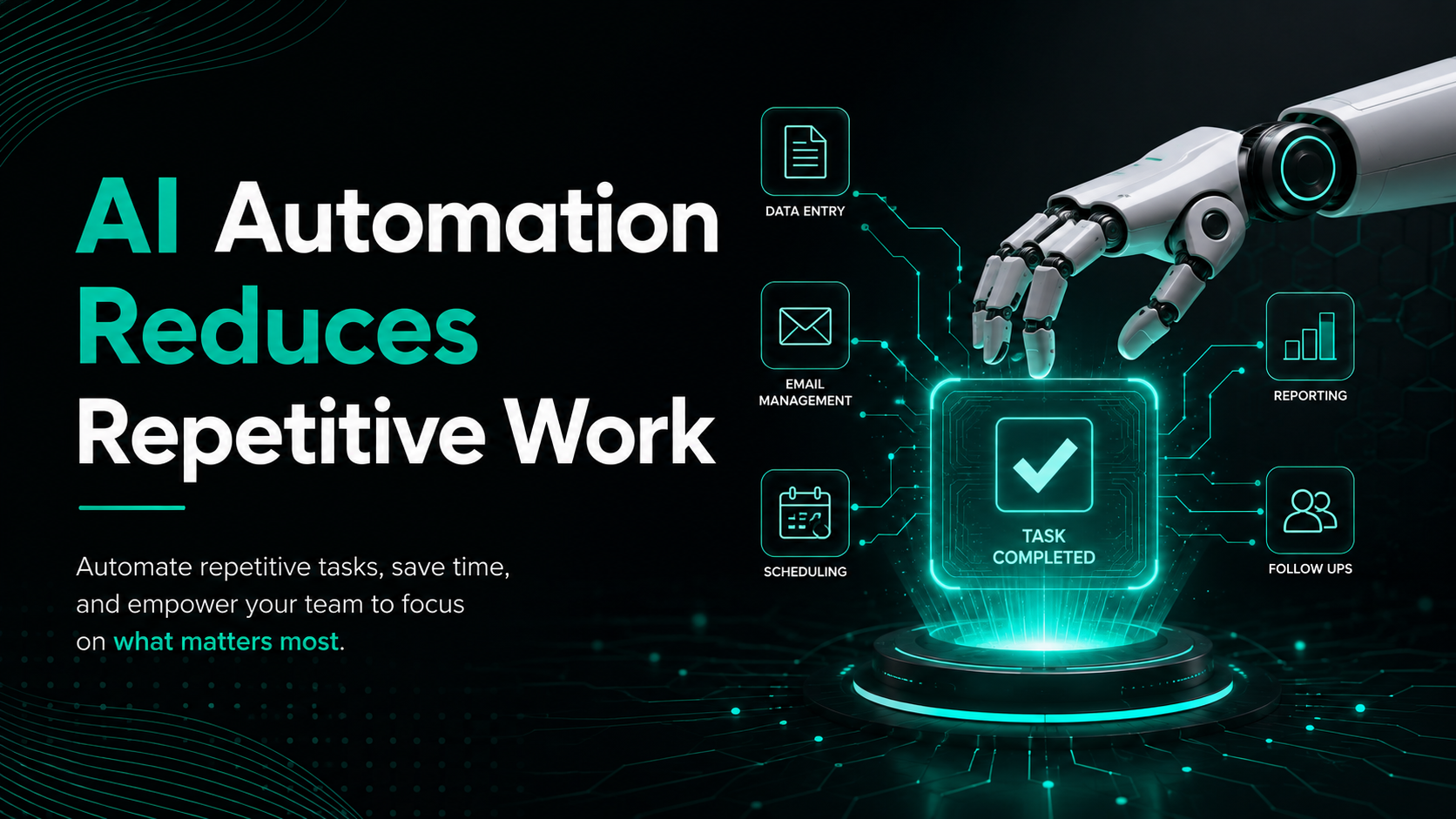
Many employees spend hours every week completing repetitive tasks that do not require complex decision-making.
These tasks may include entering data, preparing reports, updating CRM records, reviewing documents, answering common questions, or moving information between different systems.
AI automation can reduce this workload.
For example, an AI-powered system can receive a document, identify important information, categorize it, and automatically send the extracted data to the correct department or software.
A sales team can use AI to summarize customer meetings and prepare notes automatically. A marketing team can use AI to analyze campaign performance and highlight important changes.
AI workflow automation helps businesses save time while allowing employees to focus on more valuable work.
Improving Customer Support With AI
Customer support is one of the most popular uses of artificial intelligence.
Customers expect businesses to provide fast answers, but support teams often receive the same questions repeatedly. This can increase workload and slow down response times.
Modern AI assistants can help solve this problem.
Businesses can connect AI chatbots with product information, FAQs, help centers, customer databases, and internal knowledge bases. The AI assistant can then provide useful answers to common customer questions.
If the issue is too complex, the conversation can be transferred to a human support agent.
This approach allows businesses to provide faster support without removing human interaction completely. AI handles repetitive requests, while employees focus on problems that require judgment and personal attention.
Using AI to Understand Business Data
Businesses collect data from many different sources, but having data is not the same as understanding it.
Companies may have information from website analytics, sales platforms, social media, advertising campaigns, customer support systems, and CRM software.
AI can help businesses analyze this information and identify useful patterns.
For example, AI can highlight which products are performing well, which customers are becoming inactive, which marketing channels generate better results, or where operational problems frequently occur.
Business AI solutions can also make reporting easier.
Instead of manually reviewing multiple dashboards, managers can use AI-powered systems to summarize information and explain major changes in simple language.
This allows decision-makers to understand business performance faster.
Personalized Customer Experiences
Customers are more likely to engage with digital experiences that match their interests and needs.
Custom AI integration can help businesses personalize websites, mobile applications, recommendations, offers, and content.
An e-commerce platform can recommend products based on browsing history and previous purchases. A software platform can suggest features based on how a customer uses the system.
An educational application can recommend learning material based on a student's progress.
Personalization can improve customer engagement because users receive information that is more relevant to them.
However, businesses should also protect customer privacy. AI-powered personalization should use data responsibly and follow appropriate privacy and security practices.
AI Workflow Automation for Internal Operations
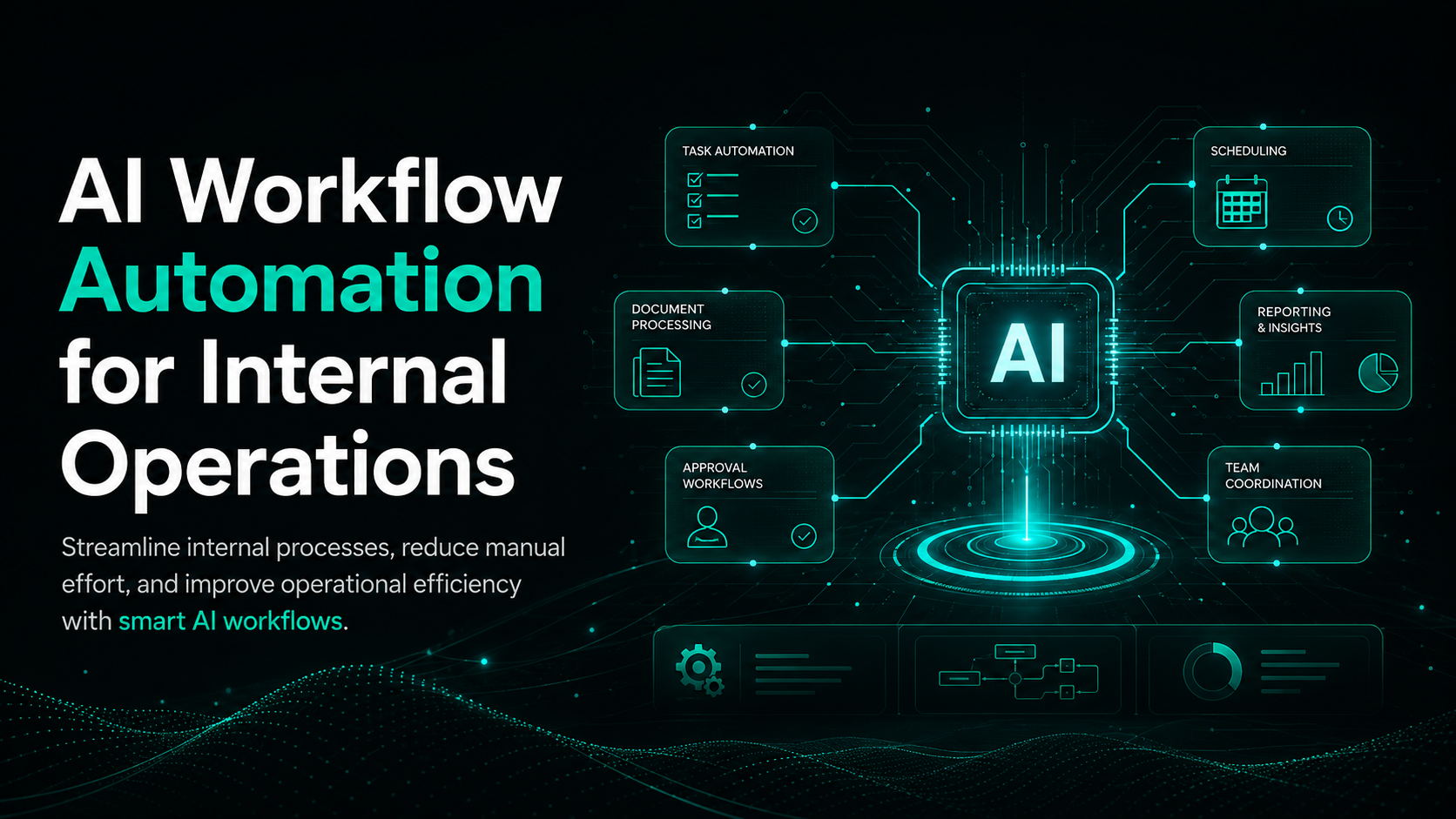
Artificial intelligence is not only useful for customer-facing systems. It can also improve internal operations.
Many businesses still depend on manual workflows.
Employees may need to review documents, approve requests, update records, organize information, and communicate between departments.
AI workflow automation can simplify these processes.
A finance team can use AI to extract information from invoices. An HR department can use AI to summarize job applications. A project management platform can create automatic progress summaries.
The goal should always be to improve efficiency rather than automate every process.
Businesses should first identify where employees spend too much time on repetitive work. AI can then be introduced in areas where it creates a clear benefit.
Document Intelligence With AI
Documents are an important part of many business operations.
Companies may manage contracts, invoices, PDFs, applications, forms, reports, receipts, and customer records.
Processing these documents manually can take a significant amount of time.
AI-powered document intelligence can extract important information automatically.
For example, an AI system can identify names, invoice numbers, dates, totals, addresses, product information, or other important details.
This information can then be added directly to a database, CRM, or internal business system.
Custom AI solutions are especially useful when a company has a unique document workflow that standard software cannot handle effectively.
Adding AI to Existing Websites and Applications
Businesses do not always need to develop completely new software to use artificial intelligence.
AI can often be added to existing websites, applications, and platforms.
A business website can include an intelligent chatbot. A mobile application can use image recognition. A CRM system can create automatic customer summaries.
A SaaS platform can provide AI-powered recommendations. An internal dashboard can generate summaries from complex data.
Custom AI integration makes it possible to improve existing technology without rebuilding everything from the beginning.
Professional AI development services can evaluate a company's current software and identify the best way to integrate AI.
The right solution may involve APIs, cloud platforms, databases, backend systems, and secure connections between different applications.
Custom AI Solutions vs Ready-Made AI Tools
There are many ready-made AI tools available today.
These tools can be useful for content generation, customer support, automation, analytics, document processing, and many other tasks.
For businesses with simple requirements, ready-made tools can be a practical option.
However, they may become limiting when a company has complex workflows or unique requirements.
Custom AI solutions can be designed specifically around a company's systems, data, processes, customers, and business goals.
A custom system can connect directly with internal databases, follow specific business rules, and provide features that standard platforms may not offer.
The right choice depends on the company's needs.
Businesses should not invest in custom AI development if an existing tool can solve the problem effectively. At the same time, companies should not force a generic platform into a workflow that requires more flexibility.
Why Data Quality Matters
AI systems depend heavily on data.
If business information is incomplete, outdated, duplicated, or inaccurate, AI results may also be unreliable.
Before starting an AI Integration for Businesses project, companies should understand the quality of their data.
Businesses need to know where their data is stored, how frequently it is updated, who can access it, and whether the information is accurate.
Good data management can significantly improve the performance of AI-powered systems.
Preparing data before development also helps businesses avoid problems later when AI becomes part of important business operations.
Security and Privacy in AI Integration
Security should be an important part of every AI integration project.
AI systems may interact with customer information, financial records, employee data, internal documents, or confidential business information.
Companies need to control what information AI systems can access.
Strong authentication, encryption, secure APIs, access permissions, logging, and monitoring can help protect sensitive data.
Businesses operating internationally should also consider regional privacy laws and data protection requirements.
A successful AI solution should improve business efficiency without creating unnecessary security risks.
Building AI Solutions That Can Scale
A small AI prototype may perform well during testing, but real-world usage can create new challenges.
When hundreds or thousands of users begin interacting with an AI-powered system, businesses need reliable infrastructure.
Scalability affects server performance, response speed, database activity, API usage, and operating costs.
Cloud infrastructure can help businesses increase resources when demand grows.
Monitoring tools are also important. Companies should track performance, errors, response times, AI usage, and system costs.
Scalable custom AI solutions should be designed to support both current requirements and future business growth.
The Importance of Human Oversight
Artificial intelligence can automate many tasks, but human judgment is still important.
AI systems can misunderstand information, generate incorrect responses, or miss important context.
Businesses should decide which processes can be fully automated and which should require human review.
For basic tasks such as document classification or simple customer questions, automation may work well.
For legal, financial, healthcare, or other sensitive decisions, human approval may still be necessary.
The most effective business AI solutions often combine AI efficiency with human experience.
Start With a Clear Business Problem
Businesses should not use AI simply because it is popular.
A successful AI project begins with a real business problem.
A company may have too many repetitive customer support questions. Employees may spend hours processing documents. Customers may struggle to find the right products.
Sales teams may spend too much time updating CRM records, or managers may struggle to understand complex reports.
Once the problem is clearly defined, businesses can determine whether AI is the right solution.
This approach also makes it easier to measure success.
Companies can evaluate time saved, customer satisfaction, response speed, productivity, operating costs, or conversion improvements.
Choosing the Right AI Development Partner
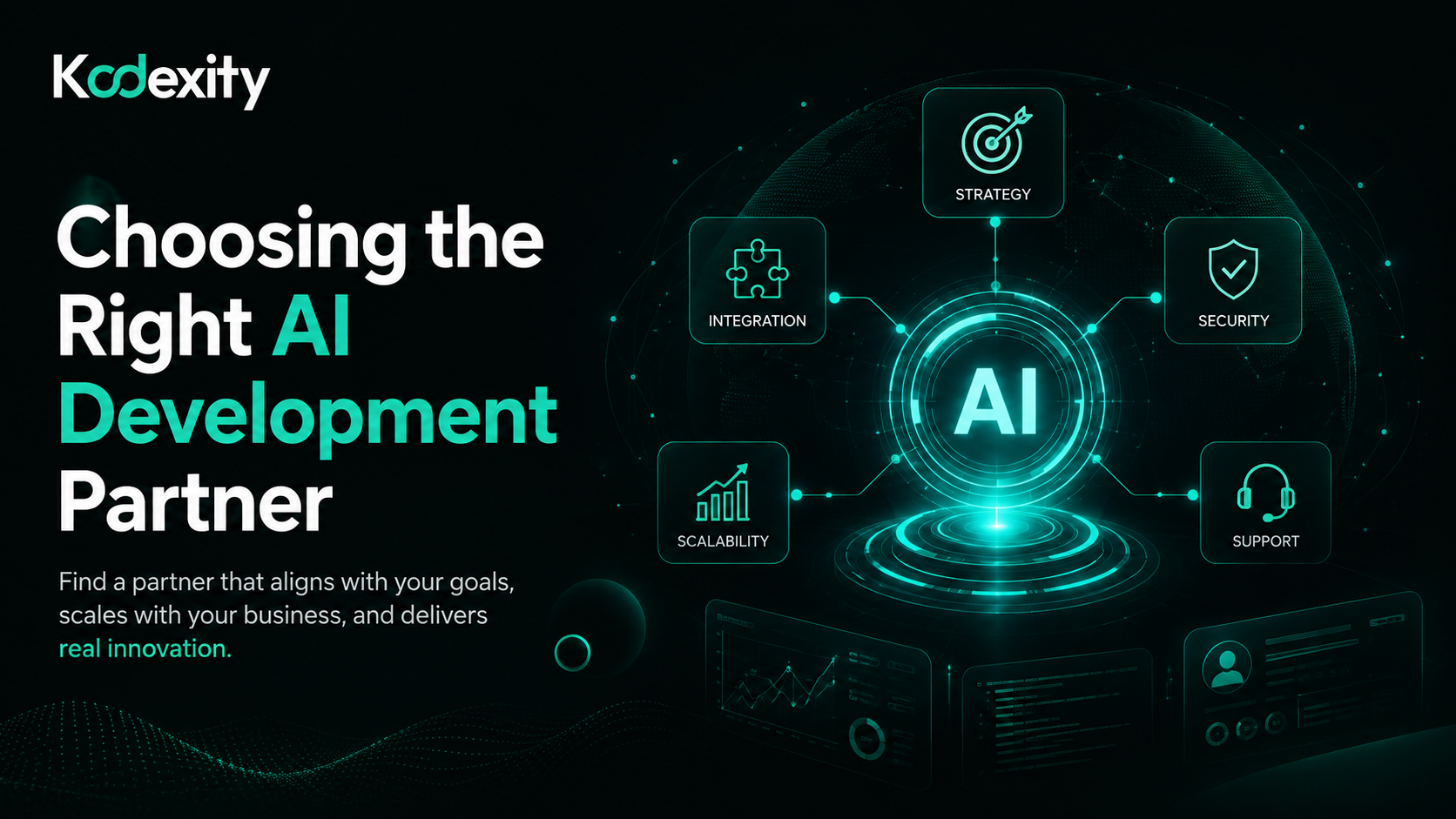
AI integration requires more than knowledge of artificial intelligence.
A successful project may also require experience in web development, mobile applications, APIs, databases, cloud infrastructure, security, UI/UX, backend systems, and DevOps.
A reliable development partner should first understand the business problem before recommending technology.
The solution should match the company's goals, systems, users, budget, and long-term growth plans.
Kodexity provides AI development services along with web development, mobile app development, cloud solutions, and DevOps support.
By combining AI with strong software development, businesses can create digital solutions that are practical, scalable, and easier to manage.
The Future of AI Integration for Businesses
AI will continue becoming a normal part of digital products and business software.
Websites will become more intelligent. Applications will provide smarter recommendations. Business platforms will automate more repetitive tasks.
Customer support will increasingly combine AI assistants with human agents.
The companies that benefit most will not necessarily be those using the largest number of AI tools.
Successful businesses will be those that identify the right problems and apply AI where it provides measurable value.
Conclusion
AI Integration for Businesses can help companies automate repetitive work, improve customer support, understand data, personalize digital experiences, and build smarter applications.
However, successful AI adoption requires a clear strategy.
Businesses should begin with a real problem, review their existing systems, improve data quality, protect sensitive information, and choose technology that can scale.
AI automation should make business processes easier rather than more complicated.
When implemented properly, custom AI integration can become an important part of long-term business growth.
Kodexity can help businesses develop AI workflow automation, custom AI solutions, intelligent applications, and AI integrations designed around specific business requirements.