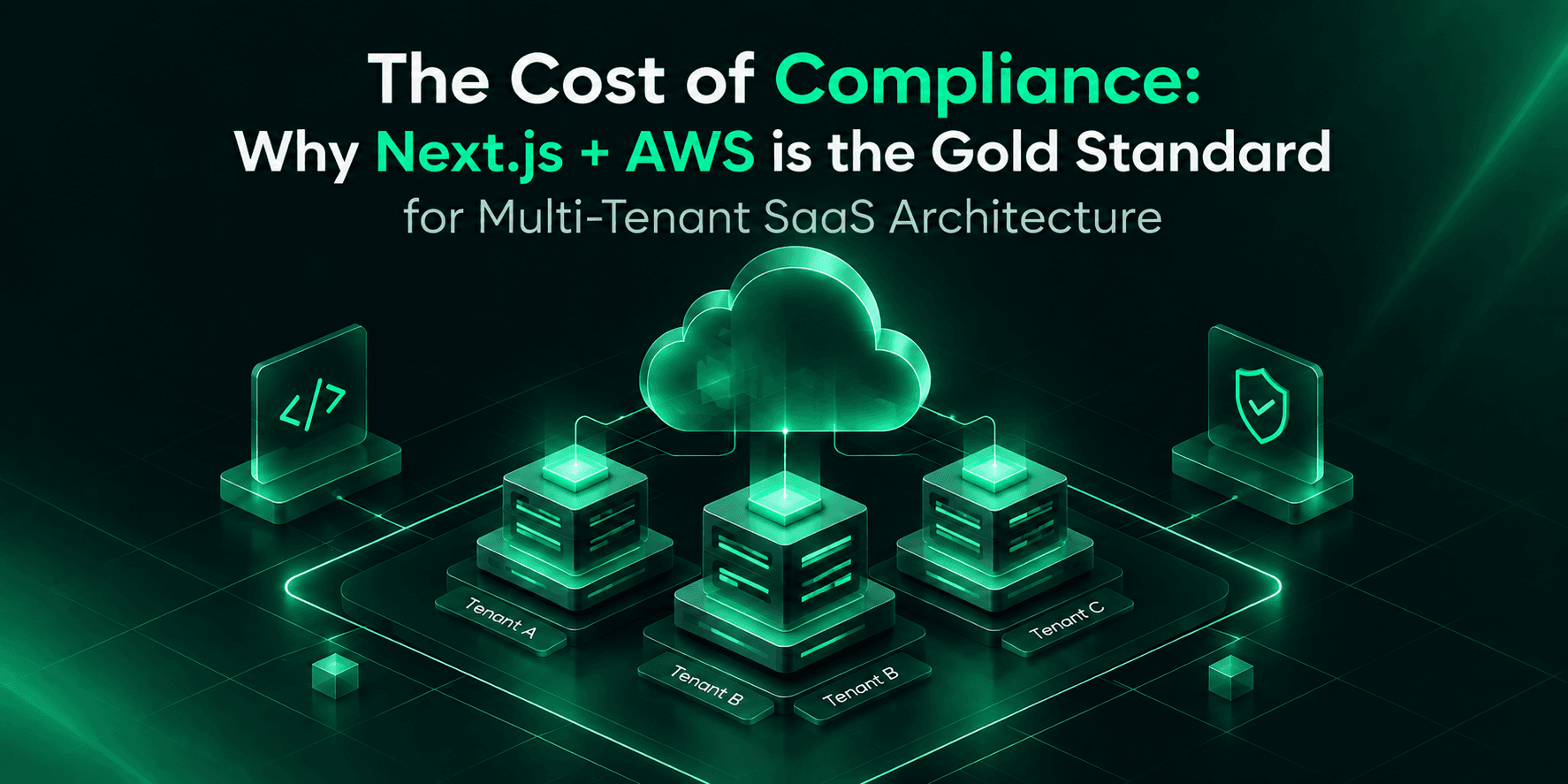
Building a modern B2B SaaS platform requires solving one of the hardest engineering challenges in software development: delivering a fast, seamless user experience while maintaining strict customer data isolation. Enterprises are no longer satisfied with basic functionality. They expect security, compliance, scalability, and reliability from the first day they adopt a platform.
This is where Multi-tenant SaaS architecture AWS becomes a critical business decision rather than just a technical implementation choice. The architecture selected during the early stages of SaaS development determines whether the product can support thousands of customers efficiently or becomes trapped under expensive technical debt.
Many SaaS companies fail not because their product lacks market demand, but because their infrastructure cannot safely scale. A weak tenant isolation model, poorly designed authentication system, or inefficient cloud deployment strategy can create security vulnerabilities that damage customer trust and create compliance risks.
The combination of Next.js and AWS provides a powerful foundation for building enterprise-ready SaaS applications. Next.js enables high-performance application delivery through server-side rendering and edge capabilities, while AWS provides flexible cloud infrastructure designed for scalability, security, and global availability.
Companies building serious SaaS products need an architecture that supports growth without compromising security. A carefully planned Multi-tenant SaaS architecture AWS approach allows organizations to balance operational costs, performance requirements, and regulatory obligations from the beginning.
Decoding Multi-Tenant SaaS Architecture on AWS: Tenant Isolation Strategies
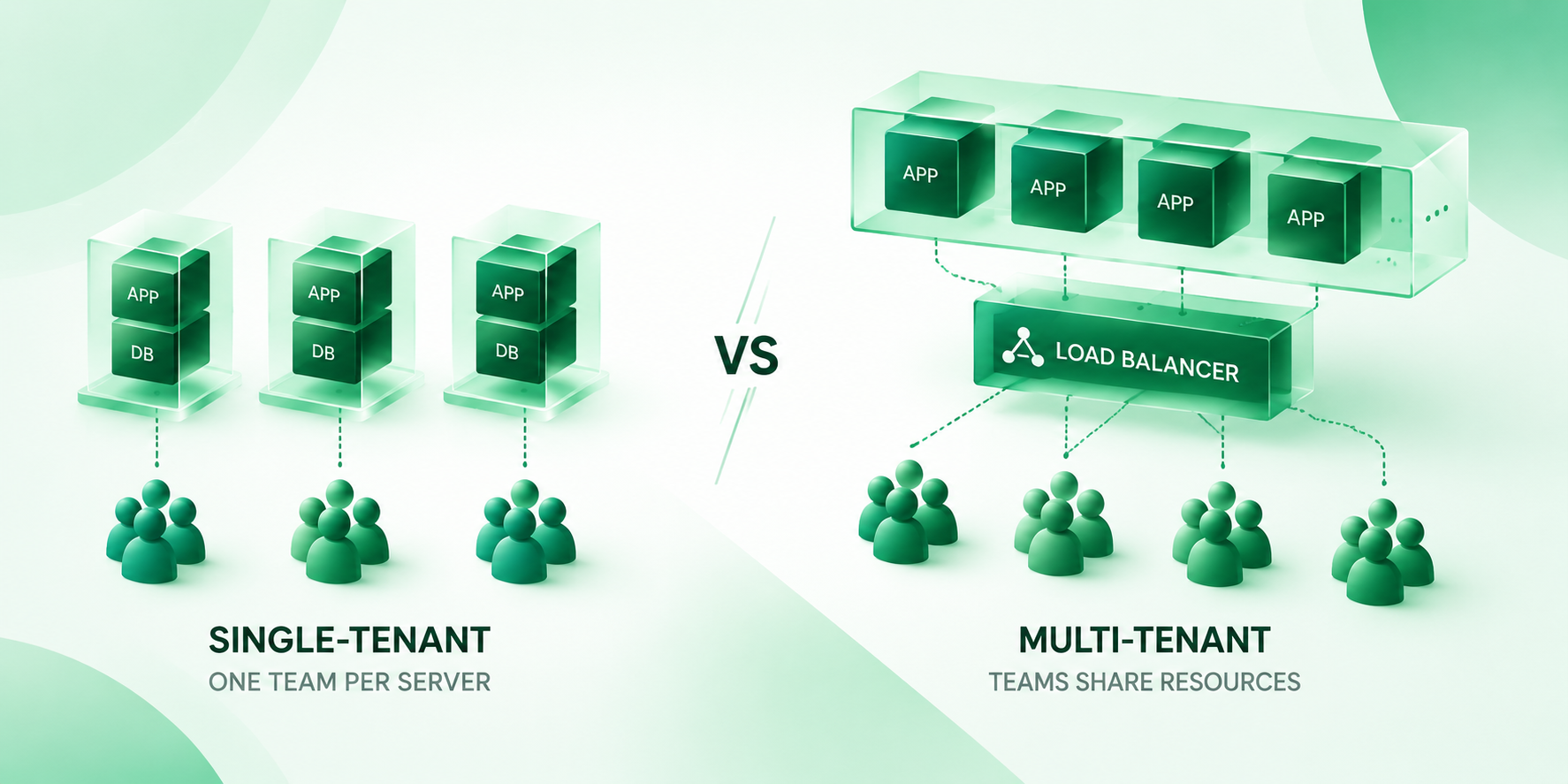
A multi-tenant SaaS application allows multiple organizations to use the same software platform while maintaining separate business environments. The challenge is ensuring that every tenant’s data, users, permissions, and configurations remain completely isolated.
The most common mistake in SaaS development is assuming that separating users through application logic alone is enough. In reality, tenant isolation must exist across every layer of the system, including frontend routing, backend authorization, databases, and infrastructure.
A shared database architecture is one of the most popular approaches among early-stage SaaS companies. In this model, all customers use the same database, but every record contains a tenant identifier.
For example:
customers_table

id
name
email
tenant_id
When a user requests information, the application retrieves only records associated with their tenant:
SELECT *
FROM customers
WHERE tenant_id = 'company_001';
This approach reduces infrastructure costs and simplifies maintenance. However, it requires extremely strong security controls because one missing tenant filter can expose data belonging to another organization.
A more advanced approach is schema-based isolation, where every tenant receives its own database schema. This provides stronger separation while still allowing companies to manage infrastructure efficiently.
For example:
Main Database

Company_A Schema
Company_B Schema
Company_C Schema
Large enterprises with strict compliance requirements often prefer a silo-based architecture where each tenant receives dedicated infrastructure. This can include separate databases, compute resources, encryption keys, and monitoring systems.
The right decision depends on business requirements, customer expectations, and regulatory obligations.
Industries handling sensitive information must consider regulations such as GDPR, HIPAA, and SOC 2. A single cross-tenant data leak can result in financial penalties, legal consequences, and permanent damage to brand reputation.
Following proven SaaS data isolation strategies helps organizations avoid these risks. AWS highlights that successful multi-tenant systems require careful planning around isolation, scalability, and operational efficiency in their guide on building multi-tenant SaaS systems on AWS.
Supercharging the Frontend: Next.js Multi-Tenancy and Edge Routing
The frontend layer of a SaaS application is responsible for delivering personalized experiences while maintaining security. This is where Next.js multi-tenancy provides significant architectural advantages.
Traditional SaaS platforms often create separate applications for different customers. This approach becomes difficult to maintain because every update must be deployed across multiple environments.
Next.js solves this problem by allowing companies to build a single application that dynamically adapts based on the incoming tenant request.
A typical SaaS platform may support custom subdomains:
company-a.yoursaas.com

company-b.yoursaas.com
Instead of creating separate applications, Next.js Middleware intercepts requests at the edge and identifies the tenant automatically.
The request flow looks like this:
User Request

↓

Next.js Middleware

↓

Tenant Identification

↓

Authentication Validation

↓

Tenant-Specific Rendering
Middleware allows developers to determine which organization the user belongs to before the request reaches the main application.
For example, when a customer visits:
acme.yoursaas.com/dashboard
the system can automatically load:
- Acme branding
- Acme configuration
- Acme permissions
- Acme business data
This creates a personalized experience without maintaining multiple codebases.
However, routing alone does not guarantee security. The backend must validate every request using authentication tokens that include user identity, tenant identity, and permission scope.
A secure SaaS request should always verify:
Who is the user?

Which tenant do they belong to?

What actions are they allowed to perform?
Combining Next.js Server-Side Rendering (SSR) with secure authentication allows sensitive information to be processed on the server before reaching the browser. This reduces exposure risks and improves application performance.
For businesses looking to create scalable SaaS platforms, Kodexity’s custom software development solutions focus on building secure, high-performance applications using modern technologies including Next.js, AWS, and cloud-native architectures.
Hardening the Infrastructure: Docker Multi-Tenant Security and Cloud Scaling
Frontend security is only one part of a successful SaaS architecture. The backend infrastructure must also protect workloads from performance issues and unauthorized access.
Modern SaaS companies increasingly rely on container-based deployments using Docker because containers provide consistent environments and efficient resource management.
When combined with AWS services such as ECS or EKS, Docker enables companies to deploy applications with controlled execution environments.
However, Docker multi-tenant security requires careful implementation. Containers should not simply be separated logically. They must be protected through resource limits, network controls, permission management, and secure deployment practices.
Without proper controls, one customer’s activity can impact every other customer on the platform.
This issue is known as the noisy neighbor problem.
Imagine an enterprise customer running thousands of automated reports. Without resource restrictions, that workload could consume excessive CPU and memory, slowing down the entire SaaS platform.
AWS container services help solve this challenge by allowing developers to control workload allocation, scaling policies, and infrastructure boundaries.
A mature SaaS deployment typically includes:
- Containerized applications
- Automated scaling
- Infrastructure monitoring
- Secure networking
- Role-based access control
These practices allow companies to create reliable scaling B2B SaaS frameworks where the platform can grow from hundreds of users to millions without major redesigns.
Database Segregation Strategies: Structuring Highly Compliant Data Layers
The database layer is where SaaS companies must make some of their most important architectural decisions.
PostgreSQL remains one of the most popular choices for SaaS applications because it provides strong security features, advanced indexing, and reliable transactional performance.
Many startups begin with shared tables using tenant IDs because it offers lower operational costs.
However, as companies grow, they often introduce stronger isolation methods such as PostgreSQL schemas or dedicated databases.
A schema-based approach looks like:
PostgreSQL Database

Tenant_A Schema

Tenant_B Schema

Tenant_C Schema
This provides better separation while maintaining centralized management.
MongoDB follows a different approach because many organizations create separate databases for different tenants.
Example:
MongoDB Cluster

Company_A Database

Company_B Database

Company_C Database
This model works well for applications requiring flexible document structures, but managing thousands of databases can become operationally challenging.
Growing SaaS companies usually follow a hybrid strategy.
Smaller customers may share infrastructure, while enterprise customers receive dedicated database environments.
This approach allows companies to control costs while meeting enterprise compliance requirements.
The goal is not maximum isolation everywhere. The goal is intelligent isolation based on customer needs, risk level, and business value.
Conclusion: Building Enterprise-Grade Systems That Last
Modern SaaS success depends on making the right architectural decisions before problems appear.
A well-designed Multi-tenant SaaS architecture AWS environment provides more than technical scalability. It creates customer confidence, simplifies compliance processes, improves operational efficiency, and enables businesses to compete at an enterprise level.
The combination of Next.js multi-tenancy, AWS infrastructure, secure Docker deployments, and advanced SaaS data isolation strategies creates a foundation capable of supporting long-term growth.
Companies that invest in architecture early avoid expensive rewrites later. Security, scalability, and compliance should not be added after success. They should be built into the product from the beginning.
Building a compliant, high-scale B2B platform requires engineering choices that last forever. At Kodexity, we specialize in architecting secure, enterprise-grade multi-tenant systems tailored to your exact business objectives. Let’s collaborate to build your SaaS platform securely from day one. Contact the Kodexity team today to consult with our cloud architects.
Explore Kodexity’s cloud solutions and software engineering expertise to build a SaaS platform designed for performance, security, and future growth.