
Software is no longer just a tool that supports the business in today's digital world. Businesses rely on technology to help them handle their customer base, accept payments, keep track of stock, coordinate employees, create reports, and automate their workflows.
European companies are also increasingly working toward the digitalization of their businesses. As the companies get bigger, however, they discover that there is no such thing as a standard program that is the ideal solution for any problem. While standard platforms can be fast and easy, they may also lead to restrictions in terms of workflows, integrations, and future scalability.
That's why European companies are opting for custom software solutions. They aren't just looking to acquire new software; they are looking to create a digital system that meets the true needs of their business model, team, and customers.
What Is a Custom Software Solution?
Custom Software is a software program or system that is created for an organization. Its design, features, and functions are determined based on the personal needs of the business.
A company will be forced to adapt, as the software is already available, ready-made. In the case of a custom solution, it's the other way around. The software is developed based on the business process.
For instance, a logistics firm could require route management, live tracking of deliveries, bills, warehouse updates, and customer notifications to be performed on a single platform. Where different tools are used, employees will be required to operate multiple systems. All of these processes can be integrated on a common platform via custom software.
One size doesn't fit all solutions; that's why European businesses are moving away from one-size-fits-all software.
For simple business tasks, one size fits all computer software might be helpful. But not all organizations are the same in terms of their workflow. European businesses are diverse and are in various industries, markets, and have various customer expectations.
In a small company, a typical software solution will be sufficient. But as the plant develops, problems may begin to arise. It can be an important feature missing, an existing integration might not be effective, or the software might not be flexible based on the company's internal processes.
In this case, workers "make do." Spreadsheets are sometimes utilized and/or information is sometimes manually transferred from one system to the other. These are short-term solutions that will ultimately have a negative impact on efficiency.
Businesses can enjoy custom software that enables them to create technology to suit their needs.
Each business will have its own specific needs.
The software needs of the healthcare business are going to be quite different from those of a manufacturing business. One organization might require scheduling, patient information, and access to be secure, and another company may think of production, inventory, and quality control.
In a similar way, for an e-commerce business, orders, payments, and inventory could be important. Advanced tools such as project tracking, client communication, and reporting may be required for a professional service company.
Because it's generic software, it is hard to address the specific needs of each industry.
Custom development provides the benefit that a firm can concentrate on those features that are vital to addressing the issues that are occurring in a real company. This also helps to minimize the complexity of the system and can make the system more functional for teams.
Custom Software enables businesses to grow. Businesses grow with Custom Software.
Any business that grows will have an increasing number of technology needs. What works well with 15 employees may not work as well with 300.
As a business expands, it may expand its outlets, export to other countries, hire new staff, or establish new departments or services.
It's possible to build the custom software with a scalable structure. The basic features can be implemented, and then additional modules and integrations are done over time.
The benefit of this strategy is that the enterprise wouldn't have to install the entire software following each expansion. Technology continues to evolve as is business.
Improved integration with other business tools.
The majority of businesses are already using several tools. You can have CRM, accounting software, ERP, payment gateways, email marketing platforms, and data analysis tools as part of your daily processes.
The issue is when these platforms are not well integrated with one another.
Suppose that the details of the customer are independent in the CRM, the invoice is independent in the accounting system, and the order details are in the inventory platform. Staff are likely to be required to re-key the same data multiple times. Staff will need to enter the same data again and again.
Already existing systems can be linked together with the help of APIs and integrations with custom software. Once the order is placed, the inventory can automatically be updated, an invoice can be raised, and the customer information can be stored in the CRM.
This integrated workflow not only saves time for the business but also minimizes errors.
Automation Can Improve Daily Operations
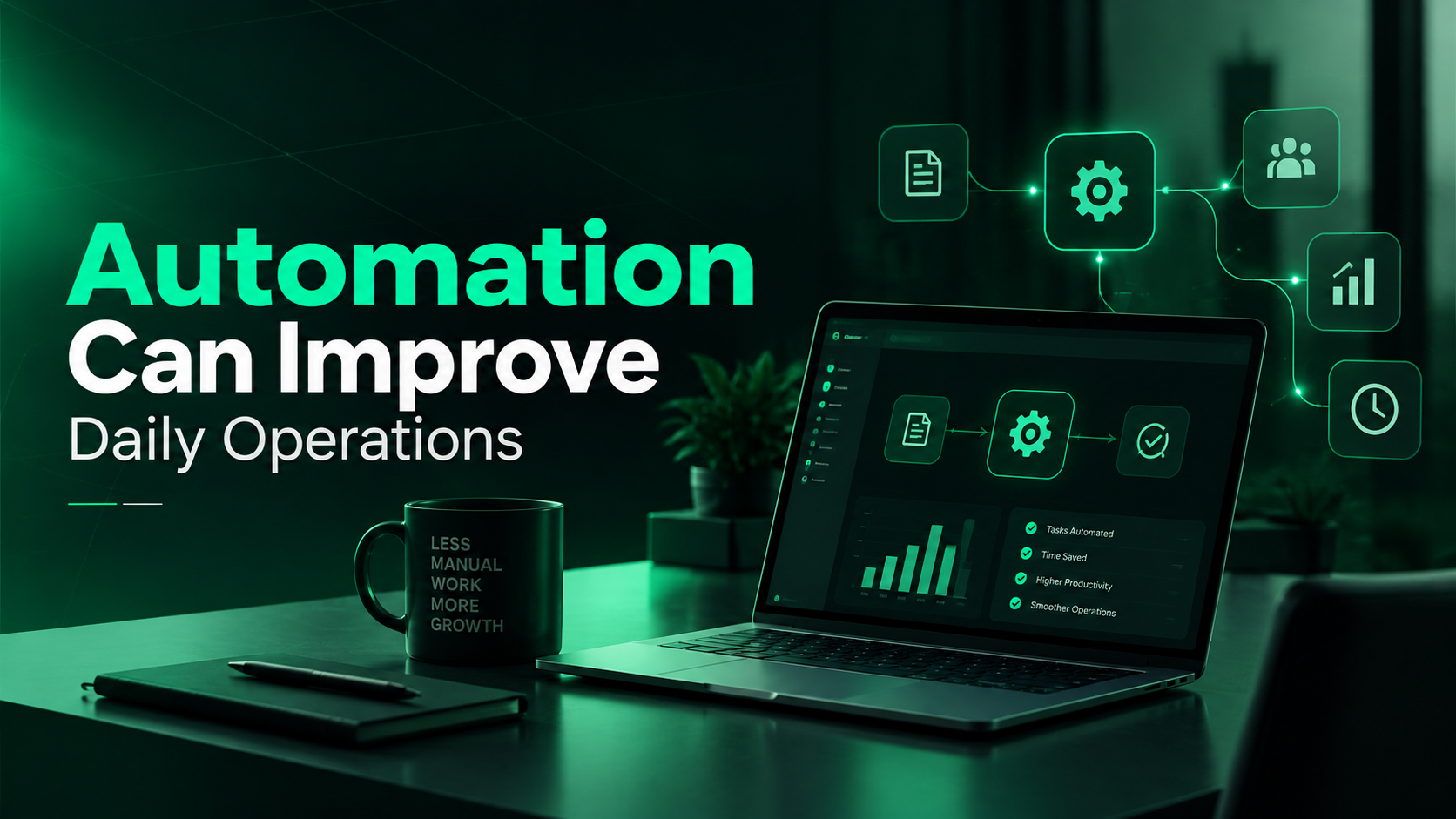
In almost all businesses, there is some manual work that is needed. Staff generate reports, send emails, update data, and transfer data between systems.
While a single task might be inconsequential, if it takes hundreds of times a day, then a lot of time is lost.
Custom software can be used to automate repetitive tasks. For instance, a form is submitted by a customer, a notification can be sent out to the relevant department automatically. Once an invoice has been paid, it can be changed, and a weekly report can be automatically sent to the management.
Automations are not about taking the place of human workers. The primary advantage that they offer is that employees can work on something other than repetitive tasks.
In Europe, data privacy is much more significant, but data privacy is more of a concern in Europe.
Data privacy is a key concern for businesses in Europe. Information about customers and employees, as well as financial information, must be handled with care.
Companies are more responsible in handling data with GDPR. There's an expectation that organizations should know what the data is for, who is able to access it, and where it is stored.
A business can achieve more control of data architecture using custom software. Various access and authentication mechanisms, and privacy controls can be configured based on the business needs.
However, just like with any other software, custom software cannot be presumed to have GDPR compliance. There is also the need for proper handling of data and legal procedures. But, with custom development, companies have more chances to contemplate security and privacy right from the beginning of the project.
Better Customer Experience
While customers don't see the back-end technology, they certainly feel the effects of that technology.
The brand experience is hampered if the site is slow, the booking system is complicated, or it requires too many steps in the payment process, or the customer dashboard is not easy to navigate.
Custom software also provides a business with the flexibility of creating the platform based on the customer journey. The company can eliminate the elements and improve the interface based on the true scenarios of the users.
It can be more convenient if it has a personalized dashboard, customer portal, mobile app or booking platform.
If the customer can perform its tasks easily, then of course customer satisfaction is improved.
Custom software can be a competitive advantage.
When everyone in the market is using the same software and the same templates, the same customer experience can result.
Custom tech provides a company with an opportunity to offer something different.
A business might feature real-time monitoring, clever suggestions, a customized pricing dashboard, a quicker onboarding procedure, or a one-of-a-kind self-service portal, to cite several examples.
But unique does not necessarily equal valuable for custom software. Real value happens when technology truly addresses real customer and/or business needs in a better way.
Where software is speeding up, simplifying, or improving the reliability of a service, it can be the service itself that constitutes a direct part of the service's competitive advantage.
An enhanced approach to features and updates, with a greater degree of control.
When you're relying on third-party software, a business is reliant on the decisions that the company makes. The provider may raise the price, cease offering a feature, or even change the entire interface.
When software is an integral component of everyday business, these modifications might result in issues.
The organization can have more control over the product roadmap with custom software. The business will be able to choose what the next feature is, what process can be enhanced, and when it wants to roll out an update.
It is particularly crucial for organizations where technology is directly used to generate revenue or support customer service.
The value of custom software in the long run.
Typically, a custom software system comes with a higher initial investment than a SaaS subscription. That's why some businesses are hesitant to get started.
But the cost of a long-term perspective should be seen differently. There can be several subscriptions, premiums, integration fees, and extra user fees within a business subscription.
Meantime, there's a hidden cost to manual work as well. When systems are not connected, a business is paying the price for that inefficiency, whether it's indirect or direct.
When custom software can replace several applications, save a lot of manual work, and aid in the efficiency of the operations for the long term, it can be a great investment.
With cloud and AI come new possibilities.
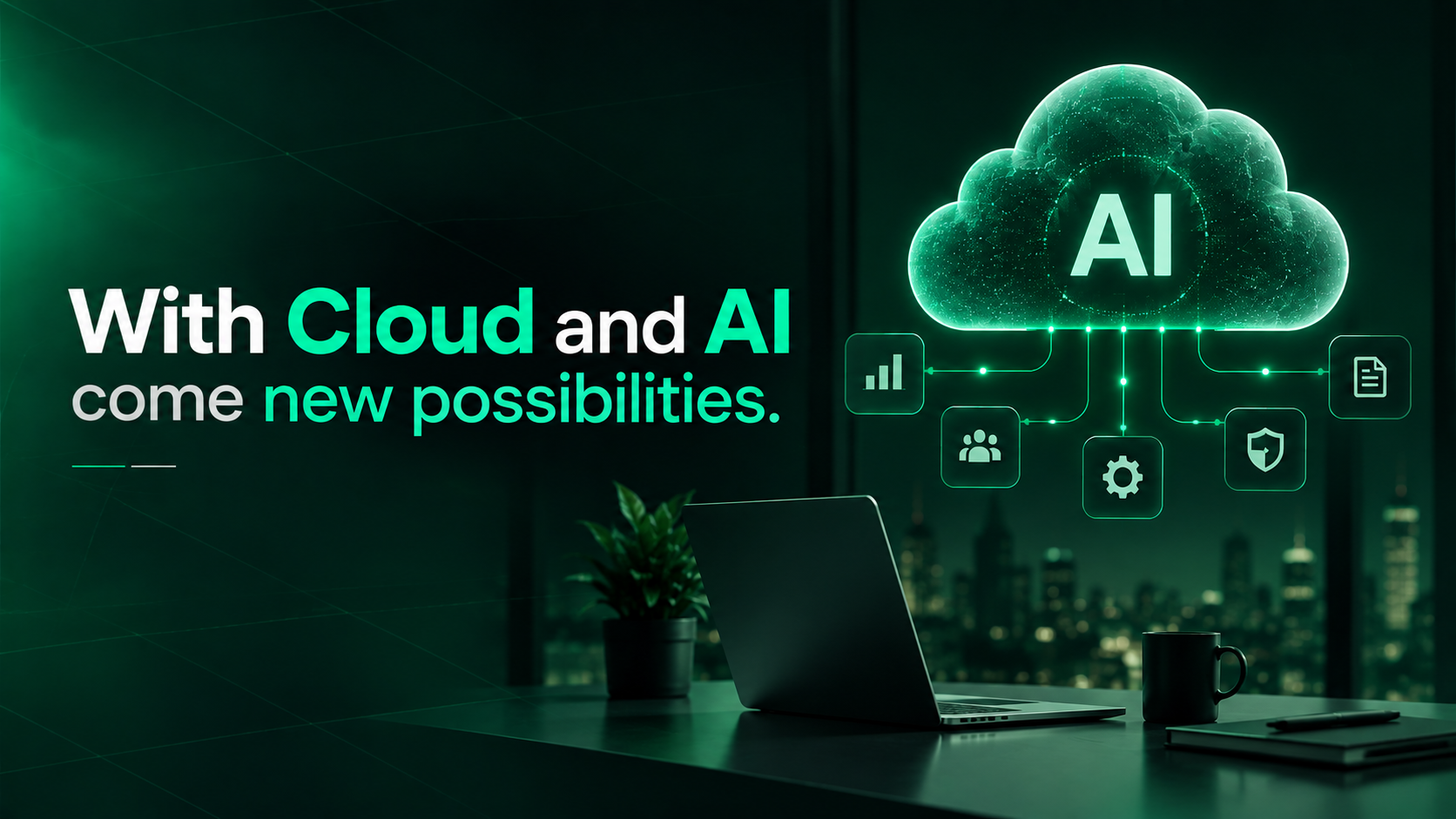
Custom development is just that much more flexible with the use of cloud technology. Systems can be accessed from various locations and easily support remote teams in European businesses.
Cloud infrastructure also enables a company to scale up the system as and when needed.
AI is also increasingly playing a significant role in custom software. AI can be used in business in a variety of ways, such as AI customer support, AI for document analysis, AI for forecasting, AI for recommendations, and AI for automation.
But AI should not be used just to jump on the trend. When AI is used to address a clearly defined business need, the results are the best.
When Should a Business Consider Custom Software?
Custom software is not for all businesses. If the needs of a company are straightforward and an off-the-shelf tool is functioning correctly, then a turnkey solution might be the way to go.
If the software begins to restrict the company, then the development of the software should be considered.
These may be indicators if employees are frequently entering the same data into spreadsheets, systems are not integrated, growth is starting to cause problems, or if employees are constantly entering the same data.
When it comes to creating new software, it is important not to follow the trend but rather the business needs and values.
The benefits of selecting the right development partner.
A successful custom software project occurs when a development company can relate to not only coding but also to the business.
The team should have an understanding of the existing workflow, the greatest challenges, and the expectations of end users with regard to the system.
Note that security, scalability, user experience, testing, and long-term maintenance are also to be taken into consideration when planning.
Clear communication is another key that is crucial. It is important for a developer to not just know how to develop a feature, but also to know how to do it correctly. They should also have an awareness of the business needs for that feature.
How Kodexity Helps European Businesses

Kodexity enables businesses to create digital solutions as per their needs.
Business problem understanding is the beginning; then the choice of the appropriate technology and development approach will be made.
It can be anything from a custom web application to a mobile app, API integration, automation platform, an AI solution, or a scalable business system, depending on the needs of the project.
If you have a business that is facing the constraints of off-the-shelf software, disconnected systems, or manual processes, custom development may be a better solution.
Final Thoughts
As businesses in today's world have more specific demands, the need for custom software solutions is rising in Europe.
There are some good products that provide ready-made platforms, and in some circumstances, these may be the right choice. But as a company starts to have more complex workflows, advanced integrations, growth, or a unique customer experience, generic software can present some limitations.
Businesses can create technology that fits their objectives with custom software. It can streamline processes, integrate systems, enhance customer experience, and facilitate growth.
Finally, it's not about creating a new application; it's about creating a new, better idea. It should aim to achieve a better solution for the real business problem and generate value over the long term.